
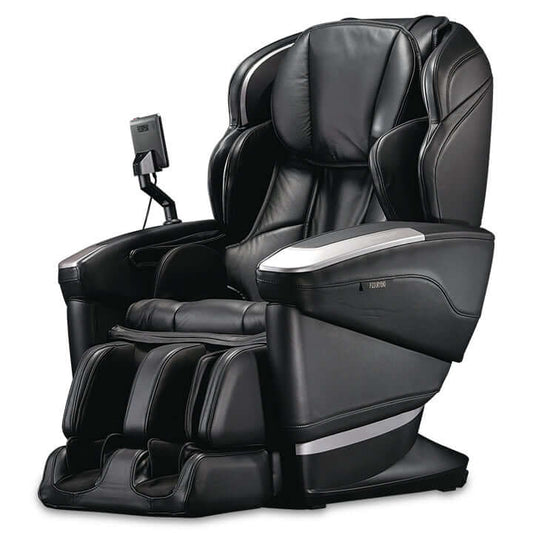


Inada made a perfect massage chair
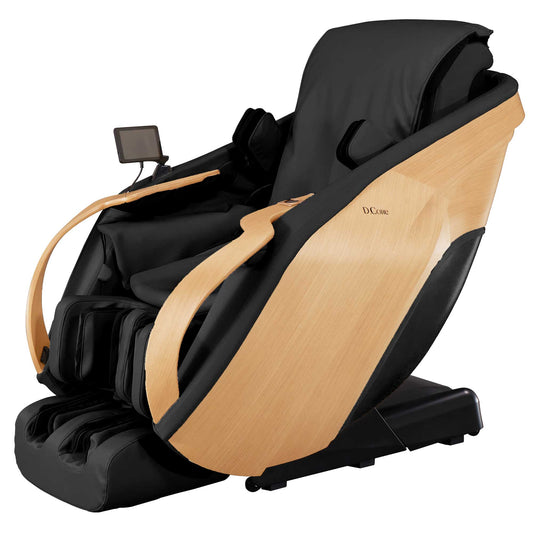
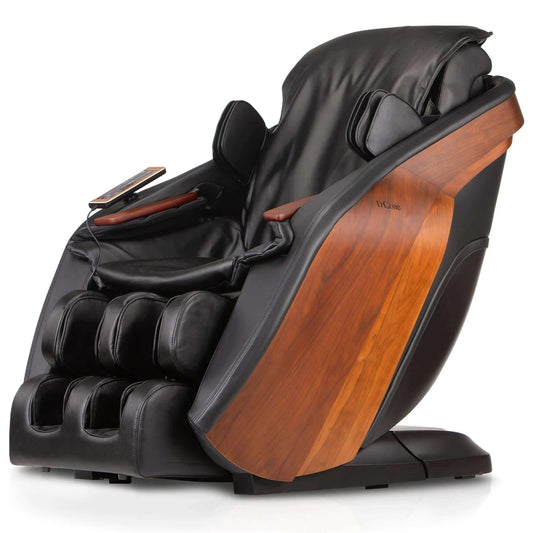
"This massage chair is truly astonishing. After long periods of physical labor, my back would become sore and difficult to recover. Rest and sleep alone were simply not enough to restore my body, and the accumulated fatigue kept building up. That’s when I started looking for a solution in a massage chair. After all, manual massage therapy requires a lot of time, effort, and cost, while medical treatments are often limited to scheduled sessions and cannot provide continuous, long-term relief. I have tried almost every “top-tier” massage chair available on the market. The D. Core 2 is very easy to overlook at first, because its massage style is calm, structured, and deliberate. During short trial sessions, people are often drawn to chairs that feel more “intense” or flashy—especially dual-mechanism models with aggressive movements. However, I ultimately chose the D. Core 2 because those energetic, symmetrical massage styles tend to become tiring over time. Among many of the chairs I tried—especially those from brands that outsource both software design and manufacturing—I noticed a common issue: lots of unnecessary movements. The rollers are constantly busy, but rarely pause to deliver deep, targeted relief. Many actions feel more like a display of capability than actual therapeutic intent—impressive at first, but fleeting. I believe this comes from a mass-market design philosophy. With new models released every year, there isn’t enough time to develop a consistent identity or refined technique. Instead, brands rely on stacking features and exaggerated movements to showcase the presence of the rollers. Because of this, I shifted my focus to brands that have their own software design and manufacturing capabilities. This significantly narrowed down my options. That said, I still tested some models where design is in-house but production is outsourced, because while hardware is the foundation, software and motion design are truly the soul of a massage chair. Through this process, I found that these brands generally fall into three categories: 1. Those that simplify movements for therapeutic purposes 2. Those that prioritize comfort and relaxation 3. Those that aim for precision, using complex techniques to target pressure points and relieve pain The D. Core 2 clearly belongs to the third category. And without exaggeration, it is the most balanced and refined product in this category. It feels the closest to a real human massage. Its mechanical design is truly unique. The hands, legs, and feet mechanisms simulate gripping and kneading in a very lifelike way—something that is rare in today’s massage chair market. Even earlier models from the same brand cannot compare. While its strength is not the most aggressive in the industry, I came to appreciate the importance of “appropriate force” after experiencing overly strong foot airbags in other chairs that actually caused discomfort. If all you want is intense foot stimulation, a cheap foot massager can do that. But when lying in a full-body massage chair, balance across the entire body is essential—and in my opinion, the D. Core 2 achieves this better than anything else I’ve tried. The back roller system stands out in several ways. First, its ability to penetrate deep into the muscles is exceptional. Even at level 2 intensity, it already exceeds the maximum strength of many other chairs. But strength alone is not enough—it is also highly precise and skillful. Second, the rollers can operate asymmetrically on the left and right sides, which feels remarkably similar to a real human massage. This is a very advanced feature and truly unique in the market. Third, when working on the lower back and glutes, the rollers can mimic the feeling of a human palm kneading the muscles. This sensation is incredibly unique and something I have never experienced in other chairs. Finally, the rollers are extremely quiet. I often meditate during massage sessions, and sudden mechanical noise can easily break that state. This level of quietness is very important to me. However, there was one major flaw that almost made me give up on this chair. The neck area comes with a non-removable headrest that contains two thick layers of foam. This completely blocks the neck massage. When the rollers reach that area, instead of massaging the neck, they simply lift the entire head. This was my biggest concern, and the biggest risk I took in choosing this chair. I had even considered giving up neck massage altogether. To my surprise, after carefully and non-destructively separating the glued sections and removing all the foam, I discovered something incredible: The chair delivers a highly refined, asymmetric, and technique-rich neck massage—arguably the best I have ever experienced. Even more surprising, removing the foam had no negative impact on body scanning or positioning accuracy. I genuinely do not understand why the manufacturer designed it this way. Those two layers of foam completely hide the true capability of the rollers. Thankfully, I uncovered it. Another surprising aspect is the airbag system. On paper, the number of airbags seems very limited—almost minimal. But in actual use, I was amazed by how intelligent they are. They are quiet, well-timed, and know exactly when to engage and when to stay out of the way. This may sound simple, but in reality, very few massage chairs achieve this level of coordination. From my experience, only a handful of models can do this properly. I’ve come to realize that the true intelligence of a massage chair lies in the coordination between rollers and airbags. Overall, the D. Core 2 feels perfect to me. One last thing worth mentioning: I almost overlooked this chair because of its appearance. It looks more like a piece of high-end furniture than a massage device. In fact, even many furniture brands don’t design sofas this elegantly. The curved wood and ambient lighting initially made me assume it was all style and no substance. As someone who loves mechanical design, I only became interested after seeing a YouTube video explaining its unique 10-roller mechanism. I then learned about its complex multi-roller hand system and the unconventional mechanical design of its leg and foot units. That’s what convinced me to finally try it. Otherwise, I might have completely missed it. Thankfully, I didn’t. I chose it, I own it, I explored it—and it has made my life better."